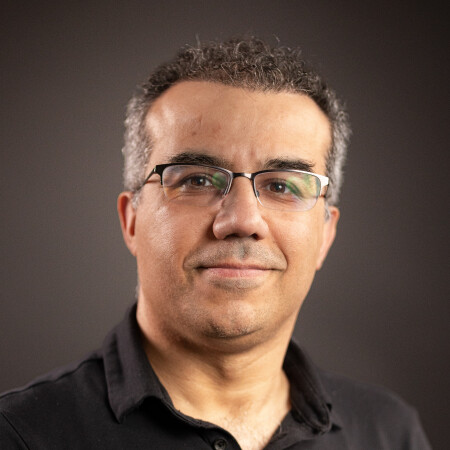
Baris Coskunuzer
University of Texas at Dallas
Time: Wednesday, December 3, 2:30-3:30PM Location: Innovation South 2108AB
Topological Machine Learning: From Drug Discovery to Cancer Detection
Abstract:
Topological machine learning applies ideas from topology to extract stable, multiscale summaries of structure in complex data. I will introduce its core tools through intuition and simple visuals, then highlight two applications. First, in computer-aided drug discovery, I will show how multiparameter persistence yields informative graph representations of molecules for property prediction and virtual screening. Second, in cancer detection from histopathology, I will show how cubical persistence captures tissue micro-architecture directly from images. Across five cancer types, our models match or surpass strong deep-learning baselines while providing robustness and interpretability. The talk is self-contained and aimed at advanced undergraduates in mathematics, science, and engineering. No prior background in topology or machine learning is assumed.
Bio:
Baris Coskunuzer is a Professor of Mathematics at the University of Texas at Dallas, where he leads the Topological Machine Learning Group. His research bridges geometry, topology, and artificial intelligence, with recent work focusing on topological methods for graph learning and medical image analysis. He has published extensively in both pure and applied mathematics, with research supported by the National Science Foundation, NASA, and the Simons Foundation. He is deeply committed to mentoring diverse trainees and fostering interdisciplinary collaborations at the interface of topology and data science.
Lizhen Lin
University of Maryland
Time: Friday, November 7, 2:30-3:30PM Location: Walters M307
Statistical Foundations of Deep Generative Models
Abstract:
Generative AI has achieved remarkable performance in various application domains, prompting a parallel line of work devoted to understanding its theoretical foundations. This talk will focus on the statistical foundations of deep generative models, the backbone of generative AI. From a statistical perspective, deep generative models can be understood from a nonparametric distribution estimation point of view, where the underlying generator is parameterized by a deep neural network (DNN). This talk provides a theoretical underpinning of deep generative models from the lens of statistical theory. The perspective allows one to explain why deep generative models work exceptionally well in practice, especially in high-dimensional tasks, and why they can outperform classical nonparametric statistical and machine learning estimators. A key insight is that deep generative models have the ability to adapt to various intrinsic structures of the data, such as a lower-dimensional manifold structure with the convergence rates dependent on the intrinsic dimension of the data, thereby circumventing the curse of dimensionality
Bio:
Lizhen Lin is a professor of statistics in the Department of Mathematics at the University of Maryland, where she also currently serves as the director of the statistics program. Her areas of expertise encompass Bayesian modeling and theory for high-dimensional and infinite-dimensional models, statistics on manifolds, statistical network analysis, and statistical theory and foundations of deep neural network models.
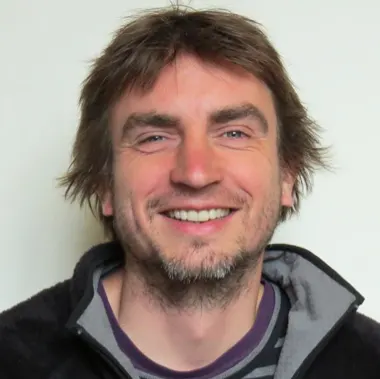
Christopher Summerfield
University of Oxford
Time: Wednesday, October 1 12:30 PM Location: Online
Zoom Link: https://tennessee.zoom.us/j/84756238937
How AI Learned to Talk and What It Means
Bio:
Christopher Summerfield, Professor of Cognitive Neuroscience at the University of Oxford (UK) and a Research Director at the UK AI Security Institute. He is a distinguished Wellcome Trust Discovery Award Holder and also serves as the Research Director at the UK AI Safety Institute. His research is situated at the dynamic intersection of cognitive science, neuroscience, and artificial intelligence, focusing on the fundamental principles of human learning and decision-making. In his Oxford-based group, Dr. Summerfield investigates these processes from behavioral, computational, and neural perspectives. A key aspect of his work involves leveraging neural network models not only as theoretical frameworks for understanding human cognition but also as practical tools to enhance human abilities, such as accelerating learning and promoting cooperation.
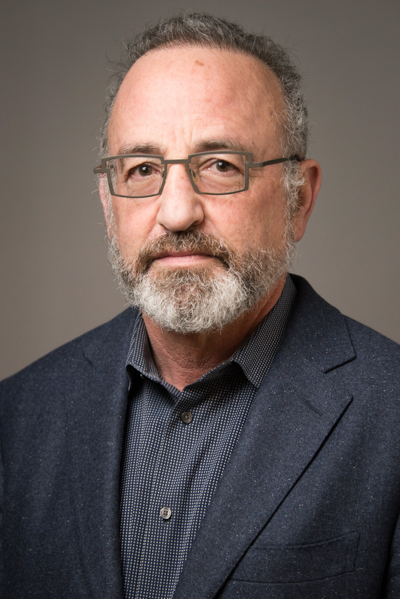
Robert Davis
University of Tennessee, Health Science Center
Time: Friday, September 5, 2:30-3:30PM Location: Walters M307
An Overview of the Use of Large Language Models with Medical Data
Abstract:
The use of large language models is rewriting the analysis of medical data. In this talk I will discuss the use of LLMs for extraction of social determinants of health data from clinical text, for identification of patients at high risk of radiation therapy interruption, and for analysis of high dimensional metabolic data. Before this, however, I will give a brief overview of what electronic medical data is, and how its structure determines the types of studies that can be done, and I will also introduce our medical data resources, which we have on over 4 million Tennessee citizens
Bio:
Dr. Robert Davis serves as the distinguished University of Tennessee-Oak Ridge National Laboratory (UT-ORNL) Governor's Chair for Biomedical Informatics, a role he assumed in 2013. At the UT Health Science Center (UTHSC), he is a Professor of Pediatrics and the founding director of the Center for Biomedical Informatics. A primary focus of his current work is leading the UTHSC 100K Genomes Project as its principal investigator, an ambitious initiative to collect genetic data from 100,000 Tennesseans to advance precision medicine, with a crucial emphasis on including underrepresented minority populations. His impactful research into the connections between genetics and disease includes the significant discovery of a high-risk gene associated with pre-eclampsia in African-American women. Dr. Davis earned his medical degree from the University of California at San Diego and his MPH in epidemiology from the University of Washington, and his career has included positions at the Centers for Disease Control and Prevention (CDC) and Kaiser Permanente Georgia.