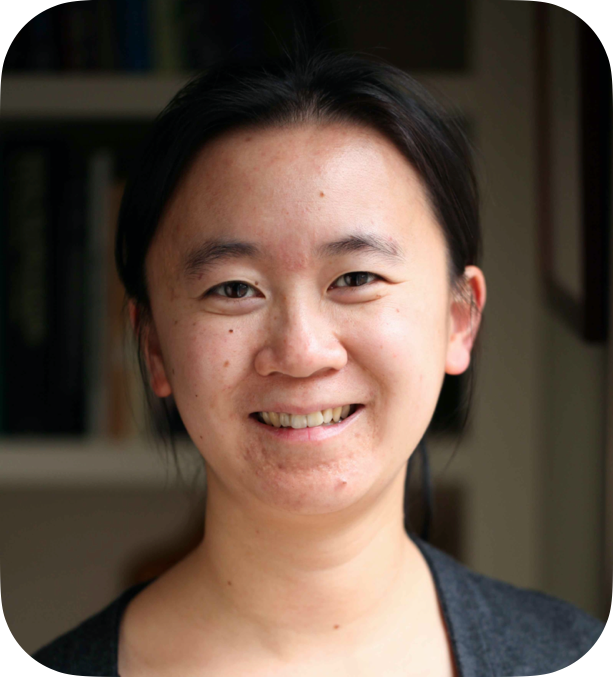
Bei Wang
University of Utah
Time: Friday, May 1, 2:30 - 3:30 PM Location: Walters M307
Topology Meets XAI
Abstract:
Deep learning models are trained on massive datasets—images, text, and molecular structures—yet the internal organization of their learned representations remains largely opaque. This talk explores how tools from topological data analysis and visualization, in particular mapper graphs, can reveal structure within high-dimensional embedding spaces. Mapper graphs highlight how clusters of similar representations form, connect, and evolve, much like a map showing neighborhoods and the roads between them. We present several applications at the intersection of topology and explainable AI (XAI), spanning large language models, image classifiers, and graph neural networks. By leveraging topological structure, we move closer to understanding how deep learning models organize knowledge, transforming opaque black boxes into interpretable, navigable landscapes.
Bio:
Dr. Bei Wang Phillips is an Associate Professor in the School of Computing, an Adjunct Associate Professor in the Department of Mathematics, and a faculty member of the Scientific Computing and Imaging (SCI) Institute at the University of Utah. She earned her Ph.D. in Computer Science from Duke University. Her research lies at the intersection of topological data analysis, data visualization, and computational topology, with an emphasis on integrating topological, geometric, statistical, data mining, and machine learning methods with visualization to enable scientific discovery in large, complex datasets. Her work has been supported by multiple awards from the NSF, NIH, and DOE. Dr. Phillips received a DOE Early Career Research Program Award in 2020, an NSF CAREER Award in 2022, and the Presidential Early Career Award for Scientists and Engineers (PECASE) from President Biden in 2024, the highest honor bestowed by the U.S. government on early-career scientists and engineers.

Elizabeth Gross
University of Hawaii at Manoa
Time: Tuesday, April 21, 4:00 - 5:00 PM Location: Student Union 362A/B
Network Reconstruction in Evolutionary Biology
Abstract:
A central challenge in both biology and artificial intelligence is learning latent structure from data. In phylogenetics, this problem takes the form of reconstructing evolutionary histories from genetic data. These histories are typically modeled as directed graphs, with leaves representing observed species and internal nodes representing ancestral populations. While tree models are common, evolutionary processes such as hybridization and gene flow are more accurately captured by phylogenetic networks, introducing substantial complexity into the inference problem. This talk focuses on identifiability, a fundamental question in statistics and machine learning: can the underlying structure be uniquely recovered from observed data? We highlight how tools from computational algebraic geometry provide a framework for studying identifiability in these models by aiding in the understanding of the underlying geometry of these models. In particular, as we will discuss, these algebraic and geometric methods can lead to new insights into when network features can be recovered, and when they can't, even with an infinite amount of data.
Bio:
Dr. Elizabeth Gross study the geometric and algebraic structure of statistical models in biology and leverage this structure to answer questions relating to parameter estimation, model selection, and hypothesis testing. Her work is interdisciplinary and lies within the fields of applied algebraic geometry, algebraic statistics, and algebraic biology. Dr. Gross currently focused on two main areas in algebraic biology: algebraic and geometric aspects of phylogenetic models and algebraic and geometric aspects of chemical reaction networks. While these are the two main areas of her work at the moment, her interests in the field of applied algebraic geometry are wide and varied, however, the these areas are connected by the underlying mathematics present.
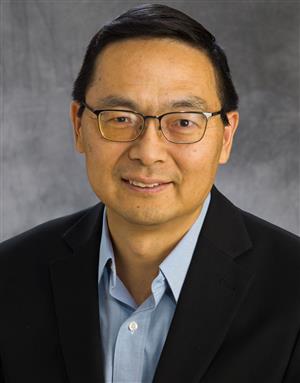
Huimin Zhao
University of Illinois Urbana-Champaign
Time: Friday, March 27, 2:30-3:30 PM Location: Walters M307
AI for Synthetic Biology
Abstract:
Synthetic biology aims to design novel or improved biological systems using engineering principles, which has broad applications in medical, chemical, food, and agricultural industries. However, due to the complexity of biological systems, performing synthetic biology in a quantitative and predictive manner remains a challenge. In recent years, thanks to advances in data science, artificial intelligence (AI) that allows computers to learn from experience has emerged as a potentially powerful tool to address this challenge. In this talk, I will highlight our recent work on the development of AI tools and an AI-powered self-driving biofoundry to accelerate the design-build-test-learn cycle in synthetic biology. Examples include but are not limited to: (a) ECNet: a deep learning model for protein engineering (Luo et al. Nature Communications 2021); (b) CLEAN: an AI tool for enzyme function prediction (Yu et al. Science 2023); (c) EZSpecificity: an AI tool for enzyme substrate specificity prediction (Cui et al. Nature 2025); (d) design of novel mitochondrial targeting sequences using generative AI (Boob et al. Nature Communications 2025), and (e) BioAutomata: an AI-powered self-driving biofoundry for protein engineering, pathway engineering, and metabolic engineering (Hamedi et al. Nature Communications 2019; Singh et al. Nature Communications 2025).
Bio:
Dr. Huimin Zhao is the Steven L. Miller Chair of chemical and biomolecular engineering at the University of Illinois Urbana-Champaign (UIUC), director of NSF AI Institute for Molecule Synthesis (moleculemaker.org), NSF iBioFoundry (ibiofoundry.illinois.edu), and NSF Global Center for Biofoundry Applications (gcba.illinois.edu), and Editor in Chief of ACS Synthetic Biology. He received his B.S. degree in Biology from the University of Science and Technology of China in 1992 and his Ph.D. degree in Chemistry from the California Institute of Technology under the guidance of Nobel Laureate Frances Arnold in 1998. Prior to joining UIUC in 2000, he was a project leader at the Dow Chemical Company. Dr. Zhao has authored and co-authored over 480 research articles and over 30 issued and pending patent applications. In addition, he has given over 550 plenary, keynote, or invited lectures. Forty of his former graduate students and postdocs became professors or principal investigators around the world. Dr. Zhao received numerous research and teaching awards and honors such as ECI Enzyme Engineering Award and NSF CAREER Award. His primary research interests are in the development and applications of synthetic biology, artificial intelligence, and laboratory automation tools to address society’s most daunting challenges in health, energy, and sustainability.
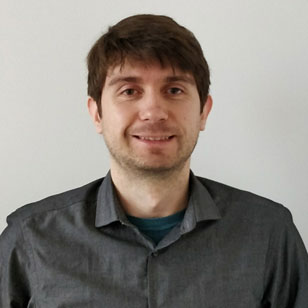
Zoran Tiganj
Indiana University
Time: Friday, February 27, 2:30-3:30 PM Location: Walters M307
Perception, Learning, and Memory in Brains and AI models: What Aligns and What Doesn't
Abstract:
Biological brains excel at building structured internal representations that support rapid learning and flexible generalization across a wide range of physical and abstract dimensions and scales. The recent success of AI foundation models raises a deeper scientific question: are these systems converging on the same computational principles that brains use for perception, learning, and memory? In this talk, I will argue that progress depends on moving beyond task accuracy to mechanistic comparisons of representations and learning dynamics. I will first discuss representational alignment in perception and present evidence that vision-language foundation models and humans rely on a similar perceptual space when making similarity judgments. I will then demonstrate that the temporal organization of infant egocentric vision provides an inductive bias of slowly changing semantics that can drive efficient self-supervised learning, motivating curriculum-based training regimes. Finally, I will describe a computational framework that integrates deep neural networks with a computational neuroscience model that organizes knowledge through cognitive maps and present behavioral and neural data that support its predictions. Together, this work highlights the potential for bridging biological and artificial systems to advance our understanding of learning and memory in both brains and machines.
Bio:
Dr. Zoran Tiganj is an Assistant Professor of Computer Science at Indiana University. Dr. Tiganj's research interests combine artificial intelligence, cognitive science and computational neuroscience with the objective of building artificial agents that can learn in an unsupervised manner from temporal and spatial regularities in the real world. Domains of application include reinforcement learning, spatial navigation, natural language processing and computer vision.
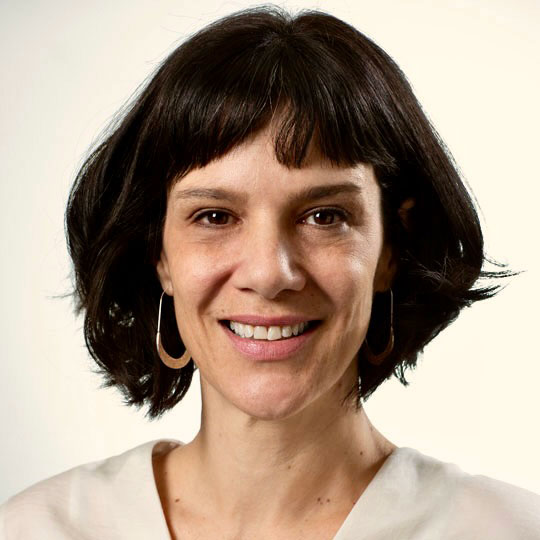
Cecilia Garraffo
Harvard University
Time: Friday, February 6, 2:30-3:30 PM Location: Walters M307
AI discovery in Physics and Astronomy: Promise and Challenges
Abstract:
Can AI help us answer the questions we already know how to ask in physics and astronomy? Can it go further, by uncovering phenomena we didn’t anticipate and posing questions we wouldn’t have thought to formulate? With modern datasets growing faster than our ability to model them, AI is increasingly becoming a partner in inference and discovery: extracting physical information when we are unsure what the relevant features even are, flagging anomalies that may correspond to new regimes, and suggesting new directions when familiar hypotheses run out. But this raises an equally deep challenge: what does it mean to trust an AI-enabled discovery, and what does it take to turn a high-performing model into genuine scientific knowledge rather than a prediction machine? In this talk, I will argue that realizing the promise of AI discovery requires new AI designed for physics and astronomy: methods that are grounded in physical structure and that are interpretable enough to support understanding, scrutiny, and falsifiable claims.
Bio:
Dr. Cecilia Garraffo is a distinguished astrophysicist and the founder and director of the AstroAI Institute at the Center for Astrophysics | Harvard & Smithsonian. She is a recipient of the Presidential Early Career Award for Scientists and Engineers (PECASE), the highest honor bestowed by the U.S. government on early-career researchers. Originally from Argentina, she earned her PhD in Physics from the University of Buenos Aires, specializing in theoretical physics and cosmology. Dr. Garraffo's work is at the forefront of AI-driven astrophysical research, where she applies advanced computational and deep learning techniques to complex problems. Her research interests include stellar evolution, star-planet interactions, and using generative AI models to advance astrophysical simulations and the atmospheric characterization of exoplanets.
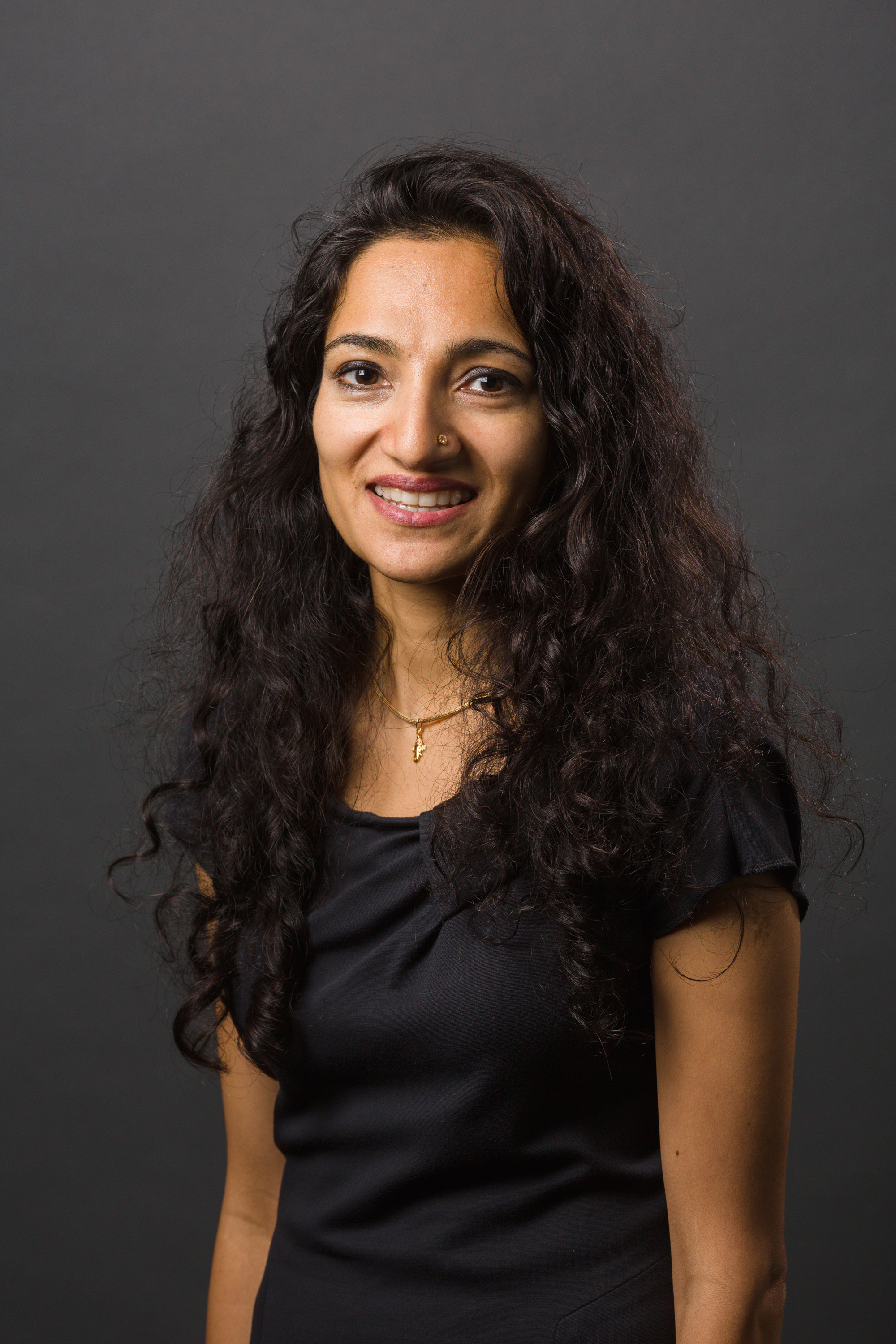
Smita Krishnaswamy
Yale University
Time: Friday, January 9, 2:30-3:30 PM Location: Walters M307
Geometry-aware generative models for scientific data generation
Abstract:
Biological and biochemical data are increasingly high-dimensional, noisy, but we can take advantage of the fact that they are constrained to low-dimensional manifolds that encode meaningful state spaces, dynamics, and regulatory structure. In this talk, I will present a unifying view of generative modeling for manifold-structured scientific data, focusing on methods that explicitly learn and exploit geometry rather than density alone. I will begin with SUGAR (synthesis using geometrically-aligned random walks), a graph-based diffusion framework for geometry-aware data generation that samples evenly along learned manifolds, enabling exploration of rare or undersampled biological states. Building on this foundation, I will show how neural networks yield more generalizable and expressive models of manifold geometry. I will first discuss our PHATE manifold learning and dimensionality reduction method, and how its diffusion geometry allows regularized autoencoders that faithfully capture global and local structure. I will then introduce our Neural FIM (Fisher Information Metric) framework, which leverages the autoencoder pullback to learn a continuous Riemannian metric from data, enabling principled measurement of volume and sampling along geodesics. Next, I will present GAGA (geometry-aware generative autoencoders), which generalizes this framework to arbitrary metrics and multiple generative modes, allowing interpolation, transport, and geodesic generation on complex biological manifolds. Finally, I will show how our new method RiTINI (Regulatory interaction network inference) complements these generative approaches by inferring dynamic regulatory networks from manifold-respecting trajectories, including those produced by GAGA or MIOFlow. Together, these methods provide a geometry-first framework for generative modeling, dynamics, and mechanism discovery in biology.
Bio:
Dr. Smita Krishnaswamy is an Associate Professor of Genetics and Computer Science at the Yale School of Medicine. She holds affiliations with the Applied Mathematics program, the Computational Biology and Bioinformatics program, the Yale Center for Biomedical Data Science, and the Yale Cancer Center. Her research is centered on the development of novel machine learning techniques to interpret high-dimensional biomedical data. Dr. Krishnaswamy’s lab specializes in creating unsupervised methods, particularly using manifold learning and deep learning, to visualize, denoise, and reveal hidden structures within complex datasets. These powerful algorithms have been applied across a wide range of biological data, including single-cell RNA-sequencing and cytometry, to advance our understanding of immunology, cancer, neuroscience, and developmental biology. She earned her Ph.D. in Computer Science and Engineering from the University of Michigan.